Didn’t See That Coming

By Carl Nichols

I like to read, and I often come across quotes that absolutely impact my paradigm. A few years ago, in preparation for a teaching I came across this quote:

“time in erodes awareness of”

Building margin into my schedule has been a process for me as well as something that I have to constantly keep a pulse on. This simple quote has helped me in so many ways, and it minimizes the times that I have to say “I didn’t see that coming.” Here are just a few takeaways…

  • The longer I am in certain routines, the less aware I am of bad habits that I have developed. I am surprised at how quickly I can drift off course.
  • I must listen to people I trust and allow them to speak honestly into my life. This includes my staff, family, and mentors.
  • I have to create a score card. In business we call it “clarifying the win.” In my family, it centers around our family covenant that includes our values. At the end of the day, I must have a score card that helps me determine whether I am winning or losing in areas of my life. This helps me focus and builds margin.
  • I must learn to say “no” more often. This is so tough because culture says that we can “squeeze it in” to our already busy lives. Thinking counter culturally will require you to say no more often than you say yes. Be prepared to hurt a few people’s feelings along the way, but in the long run you will be healthier in every area of your life.
  • I must remember the basics. What got me where I am today will not necessarily take me where I want to be tomorrow, but many of the principles are timeless. For me personally this involves things like scheduled nights with my family and quiet time with God. As it relates to leadership, a couple of timeless principles include minimizing my direct people reports, limiting access to my personal time, and keeping a rigid schedule.

Question: What are some common things people don’t see coming because their time in has eroded their awareness of?
Here I Go

By Patti Thornton

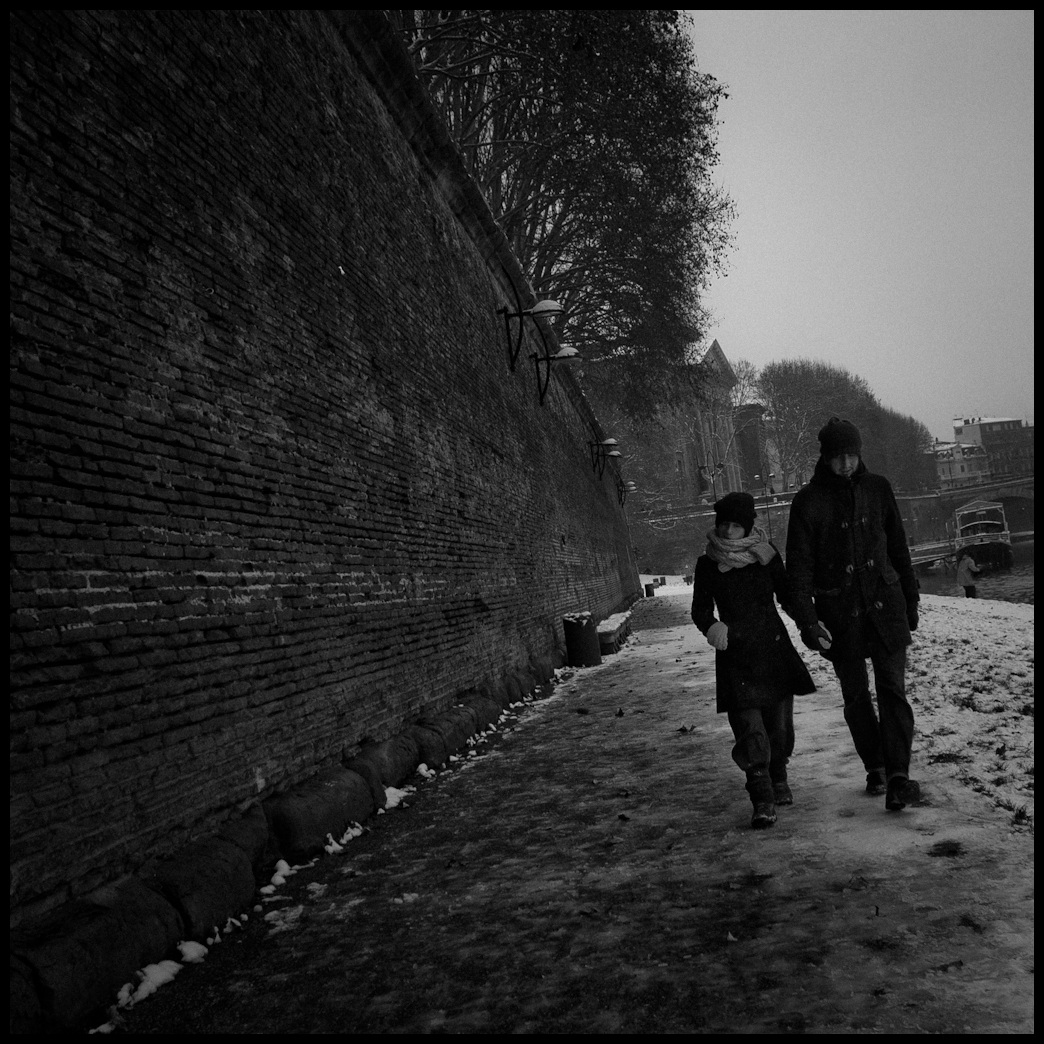
couple going for a walk in the snow

photo used by permission Gregory Tonon www.flickr.com/photos/eriatarka31

Whose idea was this anyway?  The view out my patio door compelled me to dig out the gloves, heavy jacket, and boots I thought were stored until next winter.  The sky was impossibly blue, and a thick blanket of snow magnified the sun’s reflection so brightly that sunglasses were in order for sure.  What a beautiful day!  Wilbur, too, thought it seemed like a perfect day for a walk.

Looks can be deceiving.  True, walking outside was invigorating.  But we were sucking ice cold air into our lungs and my cold fingers were protesting my gloves of choice.  Still, we walked briskly toward destinations unknown (okay, so we walked around the corner.)

Wilbur walked more slowly than I, hampered by the healing broken rib that the last winter storm perpetrated.  I walked ahead, picking up the pace so I could “count” the walk as a workout.  I really intended to walk, but a quick slip on the ice forced my body into a wide-stride run.  Let me put it this way; I had a choice. I could fall on my back side or I could run, hoping to keep my torso in line with my flying feet. Even though I had no real control over what my body was doing – proven by the awkwardness of it all – I was forced into a decision to crash or run.

Doesn’t it sometimes seem like everything we know is slipping away right under our noses?  Like feet sliding on the ice we feel flung into a position we didn’t plan for.  We understand the consequences of falling, which makes it a more predictable choice.  But what if…what if…we blindly fly with our feet?

I’m talking to myself here.  I will admit to feeling like the ground is slipping and sliding beneath my feet. In dance class, we learned how to spot; how to focus on one spot as we pirouetted across the floor to prevent dizziness.  But sometimes the dizziness of slipping and sliding happens so quickly that I can’t find the focal point.

But I know WHO the focus is even when my eyes can’t make it out.  So, Lord, let’s just do it.  I would rather sacrifice any pretense of gracefulness to fall blindly and wildly into your arms.

Here it goes…a feet gliding, arms flailing, heart pounding, head following free run.  Jesus, if you’ll just get my feet going in the right direction, I will do my best – gracefully or not – to get the rest of me to follow.

Hold firmly to the word of life; then, on the day of Christ’s return, I will be proud that I did not run the race in vain and that my work was not useless. But I will rejoice even if I lose my life, pouring it out like a liquid offering to God, just like your faithful service is an offering to God. And I want all of you to share that joy. Yes, you should rejoice, and I will share your joy (Phil. 2:16-18 NLT).

What Can You Expect Out of Life?

By Carl Nichols

Every month I gather with about 40 high capacity leaders for training and leadership development. As we began discussing one of our core values, “intentional everything”, I made the following statement…

“You can’t expect what you don’t inspect.”

We are currently in the process of dissecting every area of our church with this in mind, and I believe it will have great value for us as an organization. However, I believe this is true in all areas of our life. Here are just a few:

  • You can’t expect to have a good marriage if you don’t inspect how much face time you are giving to your spouse
  • You can’t expect your kid’s grades to improve if you aren’t inspecting their priorities
  • You can’t expect to have money left at the end of the month if you aren’t inspecting your spending habits
  • You can’t expect to retire early or wealthy if you aren’t inspecting your savings habits
  • You can’t expect to get a raise on the job if you aren’t inspecting the quality of work you are putting out
  • You can’t expect your spouse to understand how you feel unless you inspect your communication habits
  • You can’t expect your business to thrive if you don’t inspect the value it brings to the market you are in
  • You can’t expect your employees or staff to live up to your expectations if you aren’t inspecting their habits and giving them constructive feedback
  • You can’t expect your team’s morale to remain high if you don’t inspect the attitudes of those involved
  • You can’t expect to win in life if you never inspect your losses

I have tried to apply these principles to my life and family. I have found that it is very easy to drift off course, but inspection allows us to correct the problems before they get out of hand.

So what can you expect out of life? You can expect what you inspect!

What areas of your life do you need to inspect more often?