GO!

By Carl Nichols

“The local church is the hope of the world.”  Bill Hybels

When I first heard that statement, it rocked me.  I thought Jesus was the hope of the world?  And he is!  However, Jesus established the local church as his means by which the gospel was to advance.  Furthermore, he shared with his disciples in John 14:12 that we would do even “greater things” than we saw him do on Earth.  What a great theme for Summit 2014!

I believe in the local church.  I believe it is indeed the only hope for this world to turn back to Jesus.  With this in mind, National Missions is excited to announce something brand new this year at Summit: the Go Project.  The Go Project was envisioned out of multiple discussions about a network to expand our reach and plant more churches in the next few years.  After a series of meetings and through several improvements and fine-tuning, the Go Project was born.  It will officially launch at the 2014 Summit later this month.  What is it?  The Go Project is an initiative to plant 15 new General Baptist churches over the next five years.

Here are just a few of the nuts and bolts of what the Go Project will focus on to make this happen:

  • Assessment – We believe that strong church plants are led by leaders with a specific gift set.  Therefore, we value assessment as the starting point for all church planting candidates.  Our next assessment is at the end of August in Tampa.  If you are interested in planting, or know someone who is, please contact Vince Daniel at vincedaniel308@gmail.com.
  • Training – The proper systems are vital to the health of any church and thus every planter is required to attend a week long training event we call “Boot Camp” where we focus on the necessary systems for a healthy church launch.
  • CoachingChurch planting can be a lonely task.  We believe strong coaching both pre- and post-launch are essential in the health of the planter and the church.
  • Funding – Church planting has substantial up-front cost.  We believe plants should be funded to meet the needs of their particular community.  We are looking for churches and associations who believe strongly that the local church is the hope of the world to partner with us to reach the five year goal.
  • Networking – We believe that one of the most valuable tools a planter can have is relationships with other like-minded pastors.  We will work to provide networking opportunities within our church plants.

Our National Missions team is incredibly excited about the future of General Baptists and we cannot wait to officially launch the Go Project in a few weeks.  See you at the Summit!
 

Eight Point Eight Two: How long do pastors stay in one church?

By Dr. Franklin Dumond

A recent research poll from Lifeway Research suggested the average pastor’s tenure in a local church is 3.6 years (See Dennis Cook, July 18, 2011). Other studies and informal polls suggest the average or typical tenure may be a bit longer, while studies of effective leaders suggest an average tenure of 11.2 to 21.6 years. Trevin Wax suggests that most studies of the average tenure in a local church show the number to be between 5 and 7 years.How long do pastors stay at one church?

A survey of General Baptist pastors suggests the average pastoral tenure of those currently serving a church is 8.82 years. This number comes from reports submitted by 107 pastors in response to a survey mailed to approximately 700 General Baptist pastors. Bivocational pastors who responded indicated an average tenure of 7.77 years while fully funded pastors indicated a current tenure of 10.79 years. The report only measured length of service in the current ministry setting rather than average length of stay in several ministry settings.

A similar poll of Cooperative Baptists in South Carolina found an average tenure of 9 years while Barna Research reported that mainline congregations are served by the same pastor for only about 4 years.

Noted researcher and church consultant Lyle Schaller pointed out years ago that while longer tenure does not guarantee church growth, shorter pastoral tenure almost always insures lack of growth.

In an ironic twist on the numbers Gary McIntosh suggests in a blog post from June 14, 2013 that long pastoral tenure may hurt a church. His observation, based on several interviews with pastors who stayed for 25 years or more, was summarized as “The first ten years were great; the second ten years were good; I should have left in year twenty!”

This cycle is rather normal, since pastors come with a vision for the future but over time there is a natural tendency to focus more on the relationships within the church rather than those outside it. Further, pastors come to a church with a briefcase full of ideas but over time these ideas may run their course. Thus a wise pastor must reinvent himself every 7-10 years to remain effective in his leadership.

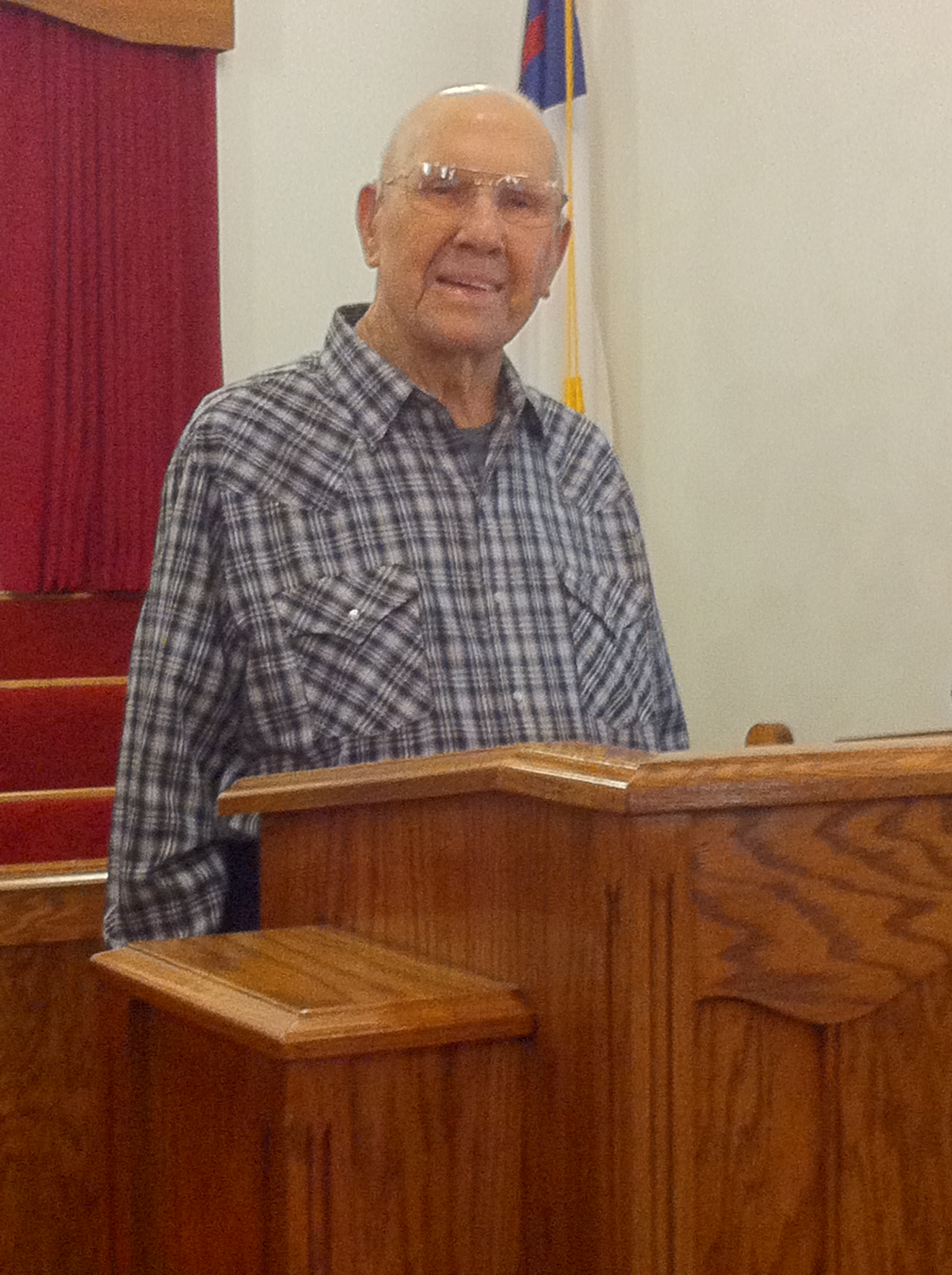
Leonard DonohoLooking back on nearly 60 years of ministry Rev. James Trotter remarked “I left some of my pastorates too soon.”

At age 95 Rev. Leonard Donoho passed along the same advice given to him when he started ministry in 1943 “I was a young minister in the association and had some good brothers to advise and guide me in my ministry. The best was to ‘stay in there and preach the Word.’”

Are there keys to staying in there? Cecil Robertson, looking back over nearly 70 years of ministry, indentifies perhaps one important key to staying in there when he says “I love people because God does.” In addition to this love for people there must also be a love for the task as he goes on to say, “I love preaching, seeing souls saved, and all that goes with ministry.”

James Black, with more than 60 years in ministry, remarked about starting over again, “My goal would be to have longer pastorates.” To accomplish that he suggests, “I would rearrange my priorities. My priorities were God first, then ministry, then family. If I could go back, my priorities would be God first, family next, then ministry.”

Planting a Seed

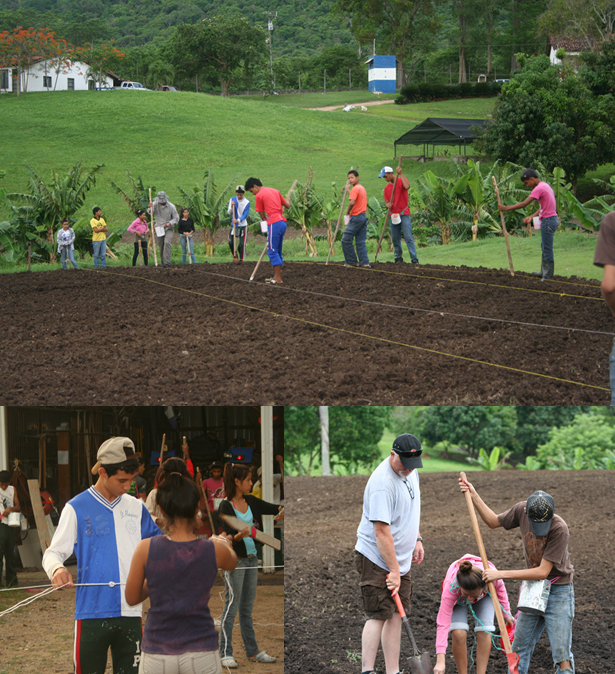
A few weeks ago, it was time to plant corn on the Faith Home campus.  It has been the custom the past few years for the Tios and some of the older boys to take care of this.  This year, however, it became a joint effort of all the youth (boys AND girls) 14 and up.  There were those faithful few boys and curious girls who showed up first, ready to work.Faith Home children planting the seeds  The others started trickling in a short time later, and then of course, some came dragging up at the last minute.  All of them arrived in time to receive instructions from Hector and Mauricio.  Pastor Miguel prayed over the corn that will provide many tortillas in the year to come, and the kids quickly got to work.  They grouped together and twisted the rope to mark off the rows in a straight line, then they split up the duties and were soon planting the seeds.  Many followed the instructions exactly as explained, some got off course and had to redo their planting, and some found creative ways to make it faster and easier to plant the seed.  They were laughing and truly enjoying the work.  We took them some Pepsi when they were finishing up, as a reward fro their hard work.  But to our surprise, when we called them over they didn’t want to quit.  They all said if they would keep going, they could finish the task in about 10 minutes.  They Pepsi could wait.  Really?  Who were these kids and what did they do with our “race to be first, leave everything behind for Pepsi” kids?  It was a moment of growth.

And that’s how it is with the spiritual harvest.  Just as the small corn plant is now popping out of the ground after this past week’s rain, our children are starting to grow up to become what God created them to be.  I am thankful for all those who did the spiritual planting and watering in the past for these precious children, so that we can see God start to cultivate and harvest their souls for His kingdom.  Some workers came early and others came later to continue the ministry in its different stages.  Just as the kids wove the string together to make it stronger for the rows of planting, God has woven each of us together to do our part in keeping the planting efforts on track.  The beauty of God’s grace is that even when it gets a little off, He brings us back, straightens us out, and faithfully brings the harvest.