Turnaround Denominations Continued

A few weeks ago I discussed Turnaround Denominations, and I shared some thoughts about what is required to be one. The idea came from Thom Rainer’s 2010 book entitled, Breakout Churches.

I strongly believe that General Baptist churches who are plateaued or declining can become healthy and growing, but the objective of a Turnaround Denomination cannot be achieved in isolation by only a few churches. For an entire denomination to be turned around, more and more churches must take on the heart of Jesus. Seeing the world as Jesus does is the best thing any church can do. Dan Spader, in his 4 Chair Discipling book, points out that our God is a missionary God, and Jesus Christ is a missionary Savior.

We see this missionary concept in the Bible over and over again. When Jesus saw a multitude of people, he was moved with compassion.  In other words, he was overcome with concern for them because he realized they were lost and searching, like sheep without their shepherd. This is what having a heart for the lost looks like. We see a wonderful example of this in John 4 when Jesus went out of his way to have a conversation with a woman who was spiritually lost and living in an entire community that was spiritually lost. In this passage Jesus challenged his disciples to lift up their eyes. He was telling them, “Look around you. What do you see? Do you see the same lost, sin-sick, dying people that I see?”

If churches as well as entire denominations are going to turn around, members must develop the same heart for the lost Jesus had.  We must stop looking down at our own feet, for to do so can minimize our ability to navigate peripheral obstructions in our Christian journey.  Looking down teaches us to be consumed exclusively with how things affect us. Instead, we must look up and around, as Christ instructed his disciples, to see those who are lost and in need of a Savior. That means we must look at those within our immediate vicinity — to our family, friends, and co-workers – understanding that they may never take that step of faith unless someone first begins looking for them or seeking them out.

But Jesus not only said for his disciples to look around or lift up their eyes and see the lost, but to actually have a spiritual conversation with them. If we do not tell them about Jesus, how else can they hear?

Taking the initiative to lift up our eyes and see the lost and then tell the lost the story of Jesus must go hand-in-hand with the leading of the Holy Spirit. The Spirit will guide us to those we need to see and with whom we need to speak. If we fail to take on the heart of Christ, our churches will remain inward-focused, dying organizations, instead of churches that are vibrant and alive, with a passion for looking outward into our communities, spreading salt and projecting light into this world.  If enough people turn around, then churches will turn around.  If enough churches turn around, an entire denomination will turn around!

Be on the lookout for my next installment about becoming a Turnaround Denomination.
10 Growth Restricting Habits

By Franklin Dumond

While churches fail to grow for a number of reasons there are several habits that restrict growth. Habits that restrict growth, unlike obstacles that restrict growth, can be broken or relearned without official action by the congregation. That is to say that these habits are learned behaviors, not requirements mandated in the bylaws. Culture can be changed without a vote but new ways of thinking and acting take time to develop.Certain church habits can restrict the growth of your congregation.

Habits that often restrict growth include:

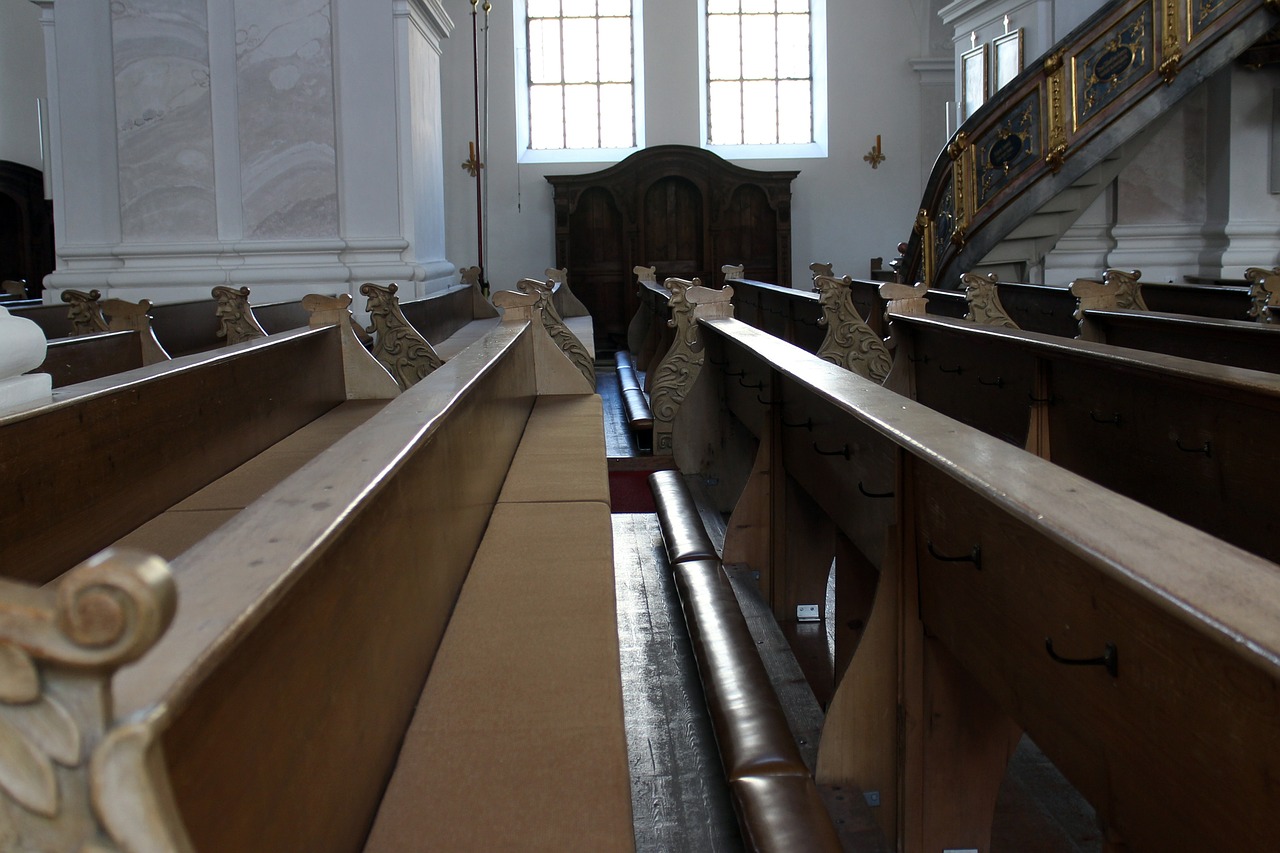
  1. Seating patterns. When the congregation huddles in the back one-third of the auditorium it not only emphasizes emptiness it also takes all the best seats that would often be preferred by visitors.
  2. Announcements. Need to be reduced or eliminated if a printed bulletin is being used. Announcements on the screen should run before and after worship not during. Verbal announcements should be limited to features that impact everyone. In a smaller church most information that cannot be written or projected can be transmitted by word of mouth. Announcements, if needed, should NEVER be used at the beginning or in the middle of a worship service.
  3. Proofing. The tendency these days to use projection systems and word processors that save files for future use introduces the need to be especially vigilant regarding errors. Errors in lyrics where words are misspelled or misused, or when stanzas do not match what is being sung, cannot be corrected just by saving the file for next time.
  4. Guest Friendly Atmosphere. Everything must be filtered through what a first time guest would expect/experience. If it is confusing or boring to the first time guest then it should not be said or done.
  5. Décor. Most church décor should be simplified and targeted more toward men with fewer flowers, ornaments, and pastels.
  6. Too many hats by too few people. Often willing volunteers are few and far between. Capable volunteers may then take on too many responsibilities, leaving them tired and frustrated while not providing a place for new folks to serve.
  7. Solo rather than team ministry. Capable volunteers forge ahead knowing it is easier to do it yourself. This results in solo ministry rather than team development and thus long term service by the same volunteers.
  8. Status Quo. Doing what we’ve always done out of habit (because we’ve always done it) rather than doing what we’ve always done because it works is a habit that restricts growth.
  9. Dust, clutter, decay. We get accustomed to dust, clutter, and decay but fresh eyes see it and often avoid return visits.
  10. Loss of Celebration in Worship. Where there is no celebration in worship a sense of duty and obligation makes growth unlikely.

In a follow-up post, I will suggest a few solutions for church leaders to use to change these habits.  (You can read those solutions here.)

What do you think? What habits have you noticed in congregations that restrict their growth potential?


Ed Stevens Day

In October 1946, Ed Stevens, a General Baptist foreign missionary, arrived in Guam to share the gospel with the people who called it home.  Ed and his wife would go on to serve on Saipan and Chi Chi Jima also, until Ed died on a ship en route to Guam for medical treatment on September 20, 1952.  We have set aside the third Sunday of September every year to remember his example of faith and missionary commitment with an annual offering for international mission work.  This year, Ed Stevens Sunday is September 21.

Ed was born in Boonville, Indiana on January 23, 1917.  He accepted a call to ministry and was ordained by United Association Presbytery in September 1945, and appointed by the Foreign Mission Board to serve on Guam in July 1946.  Ed arrived via steamship October 6, 1946, and led the first service on Saipan on April 4, 1948.  Ed Stevens was the first General Baptist missionary to die while serving on the mission field.  We remember the sacrifices Ed and Gertie Stevens made to serve as pioneering missionaries for the General Baptist movement.

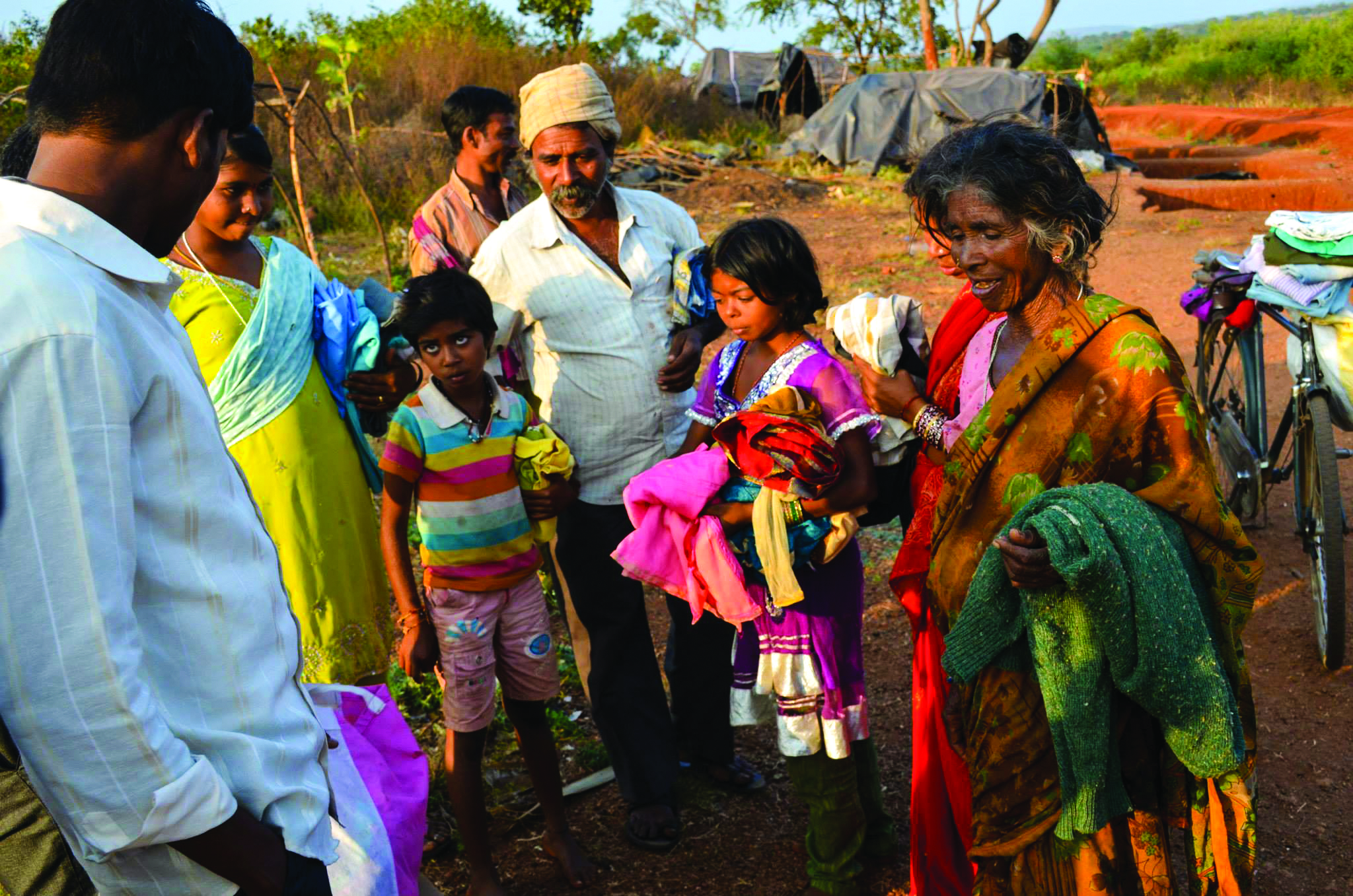
ClothingDistribution_SlumAreasThis year, the Ed Stevens mission project is dedicated to the General Baptist work in India.

India has a population of 1.252 billion people, and only 2.3 percent claim Christianity as their faith.  Most Indians have never had an opportunity to hear the good news of the gospel.  Pray for our missionaries and national workers as they minister in a hostile Hindu environment.  Pray that Indian Christians may demonstrate true spirituality and life transformation to their culture.

General Baptist outreach is targeted in two areas of South India:

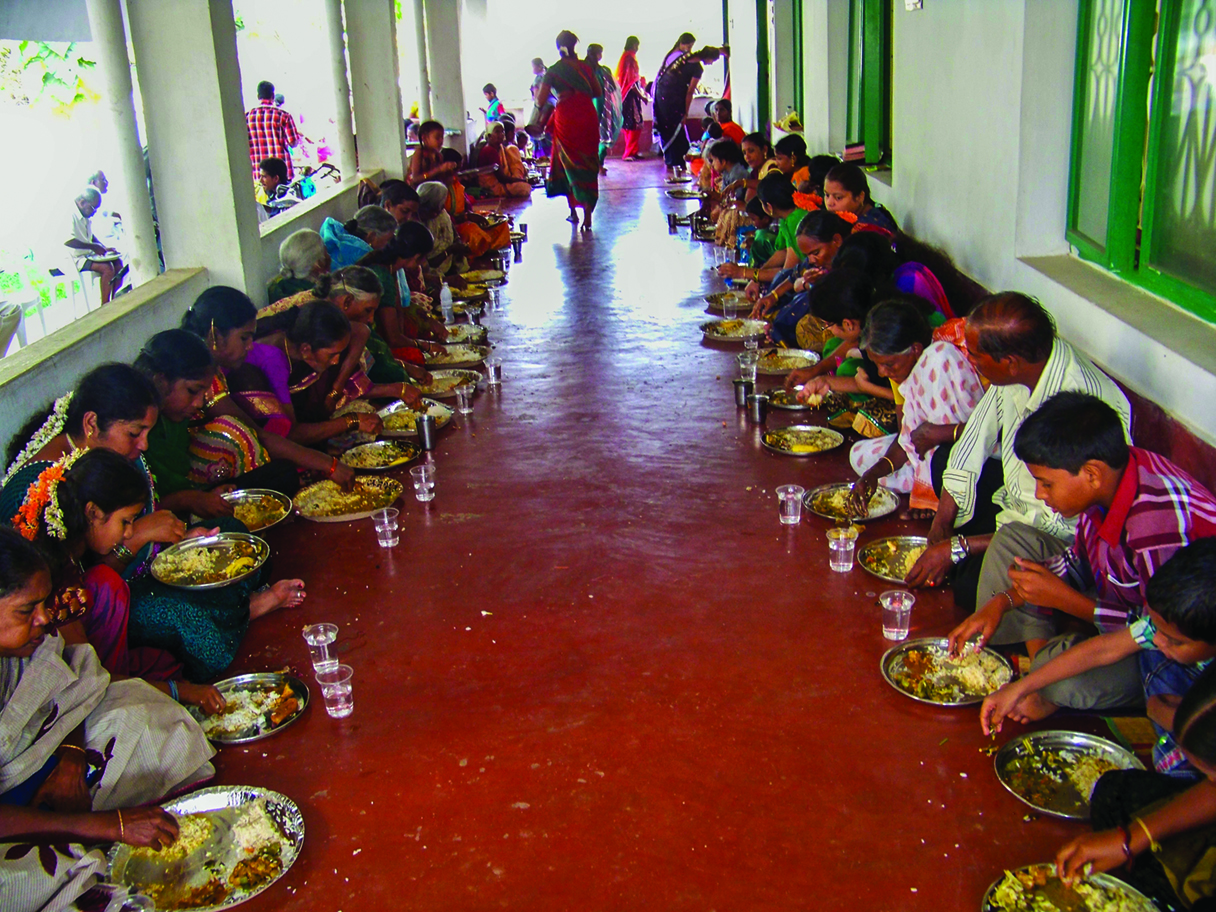
Kakinada/Pithapuram in the state of Andhra Pradesh, which has a population of 84 million.  FoodMinistryOnly 1.51% are Christian, and General Baptists have been working to spread the gospel to those in this area since 1982.  Ministry in this area is under the direction of Dr. Prakash and his wife, Jemima.  Their work in Andhra Pradesh includes operating 10-15 Dorcas Sewing Centers, Grace Home for widows, holding pastor’s retreats to provide proper training to those leading churches, a witnessing group called Bible Women, and a bedding and clothing ministry for those who cannot afford their own.

Siddipet in the state of Telangana boasts a population of 35 million.  The General Baptist work here is headed by Jessey Vemula and his wife, Brittany who work to raise the 1.2% Christianity rate.  The work begun by the Vemula family now includes the Good Shepherd’s Children’s Home, Lydia Sewing Center, audio Bibles for illiterates, a Jesus Film ministry, digging water wells, and the Timothy Initiative that trains pastors and church planters to do effective ministry.

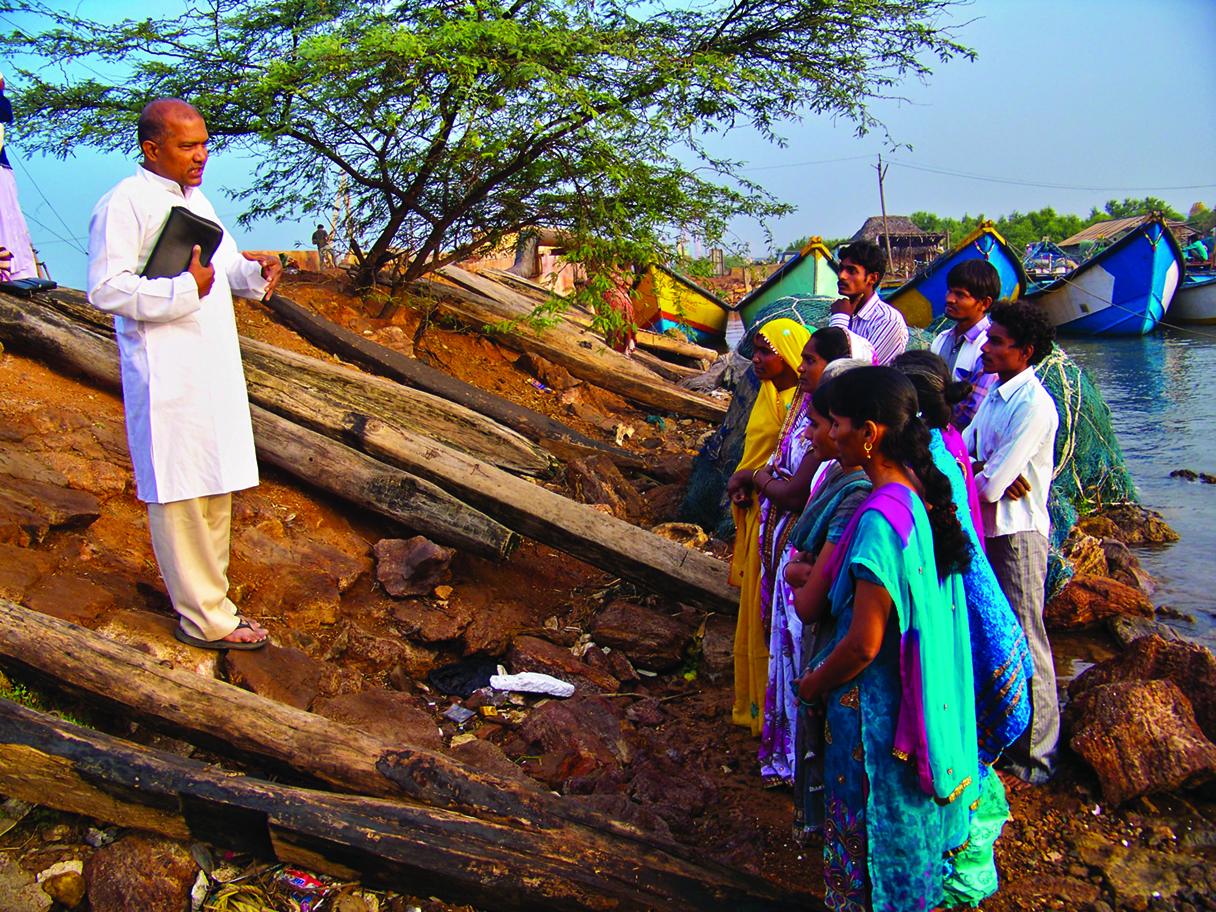
The offering goal this year is $50,000, to help fund the purchase of a badly needed mission vehicle for use in each of the India mission areas to help transport equipment for ministry RiverBaptismand food and clothing for distribution in the slums and remote areas.  These funds will also be distributed to the child care ministry, sewing centers, and poor widow ministry.  To be a part of the 2014 Ed Stevens Day, mail your contributions to International Missions, 100 Stinson Drive, Poplar Bluff, MO 63901.  You can also use our online form to give.

Be a part of spreading the gospel in India.  Help the 2014 Ed Stevens Day Campaign reach it’s goal of $50,000 to help support the work that God is doing in such a hostile environment.