10 Growth Restricting Habits

10 Growth Restricting Habits

by Franklin Dumond, Director of Congregational Ministries

While churches fail to grow for a number of reasons there are several habits that restrict growth. Now that we are re-imaging our gatherings and now that we have resumed in-person worship with social distance we have a new opportunity to identify some old habits we might put aside and to develop some new ones in their place.

Habits that restrict growth can be broken or relearned without official action by the congregation. Obstacles that restrict growth generally are enshrined in the bylaws and require a specific action to change. Habits are learned behaviors taken collectively they become the church’s culture. Culture is not required performance mandated in the bylaws.

Culture can be changed without a vote but new ways of thinking and acting take time to develop.

Habits that often restrict growth include:

  1. Seating patterns. When the congregation huddles in the back one-third of the auditorium it not only emphasizes emptiness it also takes all the best seats that would often be preferred by visitors. One of the advantages of social distance in our worship settings is that we have spread more evenly through the room.
  2. Announcements. Need to be reduced or eliminated unless they apply to everyone. Reminders that are targeted for a smaller group should be shared directly with that group.
    Verbal announcements should be limited to features that impact everyone. In a smaller church, most information that cannot be written or projected can be transmitted by word of mouth.
  3. Proofing. The tendency these days to use projection systems and word processors that save files for future use introduces the need to be especially vigilant regarding errors. Errors in lyrics where words are misspelled or misused or when stanzas do not match what is being sung cannot be corrected just by saving the file for next time.
  4. Guest Friendly Atmosphere. Everything must be filtered through what a first-time guest would expect/experience. If it is confusing or boring to the first time guest then it should not be said or done.
  5. Décor. Most church décor should be simplified and targeted more toward men with fewer flowers, ornaments, and pastels.
  6. Too many hats by too few people. Often willing volunteers are few and far between. Capable volunteers may then take on too many responsibilities leaving them tired and frustrated while not making a place for new folks to serve. One of the advantages of gradually resuming ministries is the possibility of sharing the lead among a larger group of volunteers.
  7. Solo rather than team ministry. Capable volunteers forge ahead knowing it is easier to do it yourself. This results in solo ministry rather than team development and thus long term service by the same volunteers.
  8. Status Quo. Doing what we’ve always done out of habit (because we’ve always done it) rather than doing what we’ve always done because it works is a habit that restricts growth. With several months of not doing it at all, it should be easier to try something new.
  9. Dust, clutter, decay. We get accustomed to dust, clutter, and decay but fresh eyes see it and often avoid return visits.
  10. Loss of Celebration in Worship. Where there is no celebration in worship a sense of duty and obligation makes growth unlikely. Do people smile during worship? Do AHA moments happen at least once in a while? Are answered prayers reported and celebrated?

What do you think? Have you noticed now that we have returned that some habits in congregations restrict growth? What can you do to change these habits? Will your activity become a pace-setting so that the culture of your church begins to change?

Not Getting the Picture: 3 Ways Churches Confuse

Not Getting the Picture: 3 Ways Churches Confuse

by Franklin Dumond, Director of Congregational Ministries

When our older grandson was about 18 months old he spent one of his afternoons with us.  We did all the usual stuff: playing outside chasing birds, playing inside with toys, and reading books.  Then while I was preparing a healthy supper (Grandma had already baked cookies for him) he chose to color.

Grandma strapped him into his chair, pulled him up next to the kitchen table, and with crayons and markers in hand he began the creative process of coloring.

The vegetables were on and the meat was sizzling so I decided to listen to Garrison Keeler’s Prairie Home Companion. (Yes this was a long time ago!)  Often on Saturday evenings, I used to listen to parts of that classic radio entertainment.

In our kitchen, we have a replica radio that mimics those styles of cabinetry from the radio heyday of the 1930s and 40s.  I switched it on just as a song concluded and one of the comedy routines began.  The busy grandson looked up from his coloring.  He turned in the direction of the sound.  He looked puzzled but turned back to his crayons.  The sound changed again when the comedy routine concluded.  He turned again toward the sound.  He looked puzzled.  Then Grandma figured it out.  “There’s no picture!” she announced, “No wonder he is confused.”  In our house sound from a box had always been accompanied by a picture.

Because I spend a great deal of my time working with churches, this concern over a missing video component to the sound he was hearing caused me to wonder if a church ever puzzled first-time guests by what happens before, during, or after worship services.

Here’s some of what I think becomes confusing.

  1. While casual is the new norm for worship it is possible to become careless and even haphazard to the point of distraction.  If casual becomes careless and haphazard it is likely that the newcomers and the old-timers may conclude that the content is about as important as the level of attention it seems to be getting.
  2. When technology is underused or misused it becomes confusing and puzzling to participants.  I get especially concerned when spelling errors show up in song lyrics displayed on screen and when the technician uses a mirror image rather than a presenter’s view with the result that the audience sees every move of the mouse and every setup feature that is clicked.
  3. Language that is dominated by code words or a religious vocabulary that goes unexplained is puzzling.  E.S.A.T (enough said about that).

Our church buildings were closed for several weeks this spring due to the pandemic.  Now that we have been back in our buildings with in-person worship for a few weeks now, what do you think confuses newcomers and old-timers in our worship?

O we need to intentionally make some changes now that we are dealing with the “New Normal”?

How would you go about introducing changes in your church’s culture?

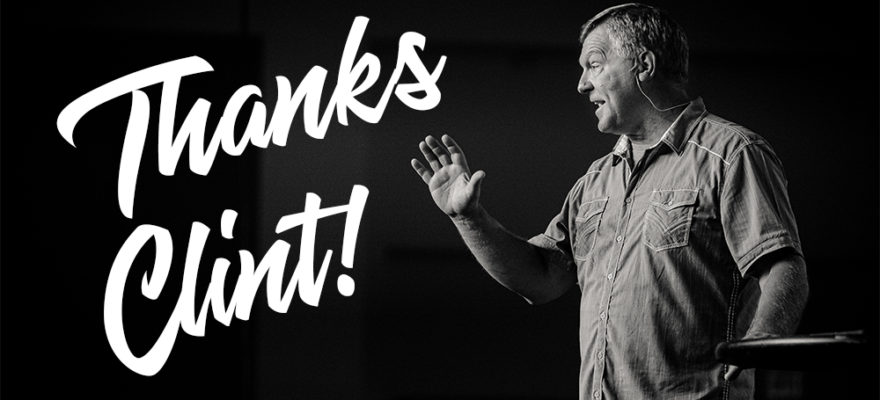
Thanks to our Executive Director, Clint Cook!

Thanks, Clint!

by Franklin Dumond, Director of Congregational Ministries

As we cope with the “New Normal” we are confronted with change and necessary adaptation to it. On the national level, we are now confronted by change with the recently announced resignation of Executive Director Clint Cook.

In our quasi-democratic congregationalism both on the local and national levels, we often undervalue leaders and undermine leadership. We too often fail to realize that “Committee of the Whole” and “One Man One Vote” cannot be located in our concordances since these terms are not included in the Scripture. In the Scripture, leaders are called by God and affirmed by His people. Leadership results from a communicated vision that motivates action and support from those being led.

At the conclusion of our June Leadership Team meeting, we were all surprised by Clint Cook’s resignation announcement. As we concluded this monthly meeting that day he firmly but politely told us “it’s time for this experiment to end.”

Over the last few weeks, we have been taking steps to conclude his tenure by updating documents and revising some schedules. The Personnel Team, the Budget Team, and the Executive Committee have all begun to function by taking steps toward transition. The Core Leadership Team remains focused on daily ministry to and for General Baptists with weekly informal conversations to stay abreast of current situations. The full Leadership Team meetings will still be held monthly on the first Tuesdays.

When Clint assumed the role of Interim Executive Director in 2012 that resulted in his confirmation as Executive Director in 2013, he joined the ranks of men who have served in that capacity with distinction across the years.

  • J. L. Mundy, 1960-1964
  • Kenneth R. Kennedy, 1965-1976
  • Glen O. Spence, 1977-1992
  • Dwight Chapman, 1993-1996
  • Ron Black, 1997-2010
  • James W. Murray, 2010-2012
  • Clint Cook, 2012-2020
Thanks Clint!
Thank you, Clint!

Very few people ever realized the personal price Clint paid in those early years of his service to the denomination. He remained as pastor of Real Life Church in Springfield, Illinois so his service both there and as executive director became “flex-time”. In addition to those two roles he retained his role in Next Level Coaching that he and I had initiated in 2009. In those years of coaching he often traveled a circuit across four states in two days every month. After he became Executive Director I often quipped “Clint used to work for me. Now I work for him.”

Some people mistakenly equated flex-time with part-time. When he explained his various ministry roles to some of his congregation Clint reported, “They were amazed at how much I got done in my free time.”

In his tenure as Executive Director Clint provided the impetus for innovation in departmental staffing and function. As positions opened due to retirement he suggested team approaches to ministry in the hope that this would take ministry back to the grassroots. The Barnabas Project was developed in 2014 to provide connections to pastors through regional representatives. Church planting was similarly entrusted to a team of church planters working through the Go! Project that eventually morphed into the Creative Church Planting Network.

As Executive Director he took steps to upgrade and extend the life of the ministries building in Poplar Bluff, Missouri. A substantially refurbished building was made possible by the sale of a small unused corner of the property so that reserve funds could remain intact.

The Summit continued to serve our people with dynamic worship, practical training, and up-close-and-personal missionary contact. Having served as the first moderator/host of the newly designed Mission & Ministry Summit in 2007, Clint continued to advocate for the Summit to become both a national and international gathering of General Baptist leaders.

Clint also connected to our mission work in The Philippines, India, Honduras, Mexico, and Jamaica by leading conferences and visiting local in-country ministries.

Throughout these enterprises, Pastor Clint continued to lead the Real Life Church in its growth and development culminating in a multi-million dollar building project to provide for the needs of the congregation.

Despite the personal and professional challenges he faced, Clint remained loyal to the missionary cause espoused by the core theology of a General Atonement that Jesus Christ by the grace of God tasted death for every man. The Real Life Church remained a leading contributor to denominational missions through Unified Giving as well as through some amazing, God-given special gifts to special causes.

I learned a few years ago that no one of us is perfect and that each of us can only do the best we can with what we’ve got. Looking back on his eight-year term I am sure Clint would agree that there were probably some things that could have been done differently. After all, there are always options and choices. But as I look back on those eight years I just want to say “Thanks for doing what you could do to advance the cause of Christ through General Baptists. Thanks, Clint!”