By John Galyen
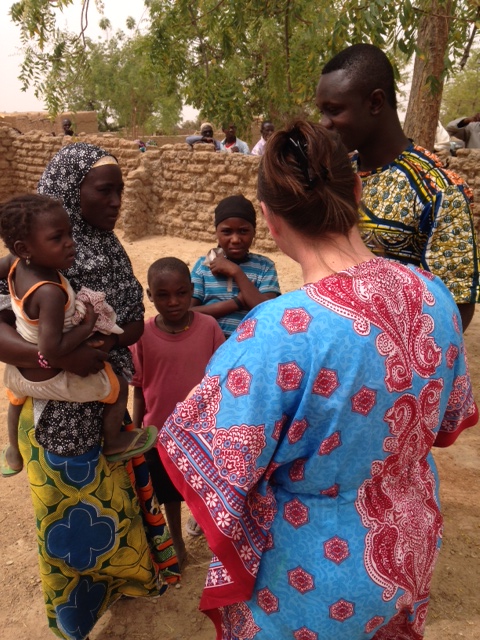
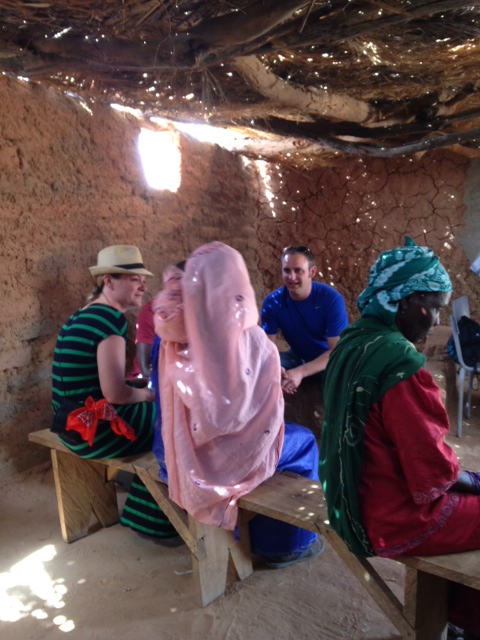
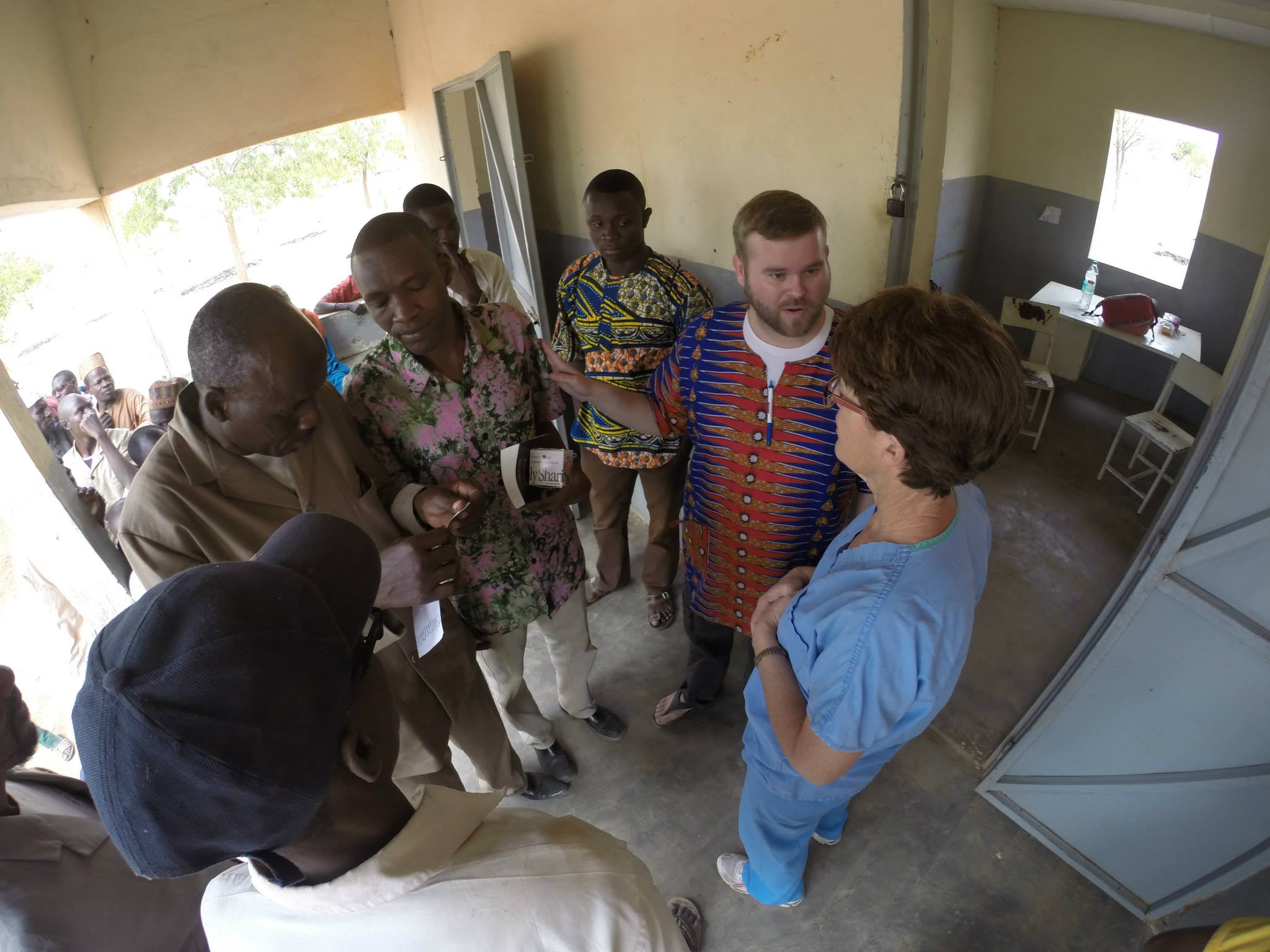
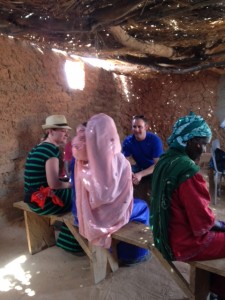
As I write this, I am sitting in a guesthouse in Maradi, Niger. A total of fourteen General Baptist short-term missionaries have come to this West African nation to share the gospel while providing medical care and famine relief to five villages outside the city.  In a nation of over 17 million people (half of whom are under the age of 15) there are fewer than 50,000 Christ followers. According to one American missionary living here, Niger’s population is expected to double in the next five years. The need in Niger is incredible; in fact it can be a bit overwhelming. We cannot meet all the needs in this place, but we can make a difference one village, one life at a time.
Five General Baptist churches are represented on our team, including Leigh’s Chapel, where I serve as pastor. It has been especially rewarding to experience this trip with three of the folks I worship with each week. As a pastor, I long to see the people I serve grow deeper in their walk with Christ. I believe one of the greatest ways to facilitate this kind of growth is to provide them with opportunities to serve outside their own context-opportunities like the ones provided through GBIM. There are 3 reasons why I believe short-term mission trips have a positive impact on the local church. International missions changes our perspective on what God is doing around the world, provides opportunities for us to walk in obedience to the gospel cal, and strengthens the work of the church at home.
Perspective
It is easy to become so focused on what we are trying to do in our local churches that we forget what ministry is all about. We spend a lot of time and energy planning programs, preparing sermons, and solving problems. Of course, these things aren’t bad, but it is all to easy to forget that spreading God’s glory to the ends of the Earth is what we are to be about. Everything we do in the local church should aim to do this. We should be publishing the fame of our God worldwide so that an ever-increasing number of his human creatures will recognize his inestimable worth and declare His glory with their lips and lives.
Short-term missions can function like a reset button that clarifies our perspective, reminding us that God is at work around the globe. At home in our churches we can easily get discouraged or distracted by trivial things. Global missions enlarge our vision and remind us of the vastness of God’s plan.
 Obedience
Each of the four gospels contains some type of great commission statement. Our Lord’s command to make disciples of all nations has never been rescinded and has yet to be fulfilled, therefore it is still just as relevant for the church in the twenty-first century as it was in the first. When God’s word speaks, we must obey. This is not a cold, detached acquiescence to orders, but rather a deep-seated desire to share with others the love we have received.
As a church leader, I am constantly looking for new ways to motivate people to get involved in the life of the church. Short-term mission trips provide opportunities for people to step our in faith and obedience to the Great Commission. From fundraising to prayer support to the actual mission experience, our people will have their faith stretched like never before. One of the old hymns we sometimes sing at Leigh’s Chapel is “Trust and Obey”, which says, ” There is no other way to be happy in Jesus, but to trust and obey.” To be happy in Jesus we must trust and obey His cal to spread the gospel. Obedience is not something others can do for you; it is something you must do yourself.
Stronger Churches
As people step out in faith on short-term mission experiences, they almost always come home on fire for the Lord. I have seen it over and over again. Missions have a way of stoking the fires of passion for Christ and his Church. I cannot think of a single church or pastor who would not want to see people consumed with a passion for Christ and those for whom He 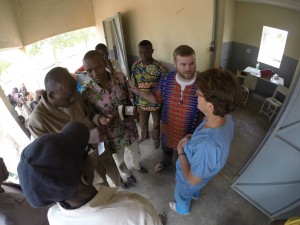 died. The infusion of Holy Ghost power that often accompanies the short-term missionary when they return home is well worth the (sometimes expensive) monetary cost. People with enlarged visions of what God is doing in the world rarely settle for the status quo in the local church. Short-term mission trips have a way of strengthening the effort of our church here at home by opening our eyes to immediate needs and encouraging passionate involvement in the lives of those around us who need Christ.
I can personally attest to the 3 things mentioned above. Over the past 18 months, our church has sent our thirteen members on a total of six mission trips to six different nations. It has been incredible o watch our church culture evolve from having zero direct involvement in missions to becoming an active church in this important area of ministry. Our involvement in missions has even affected other areas of church life. As a pastor, I have witnessed people going deeper in discipleship, giving more sacrificially, praying more fervently, and participating more fully in the life of the church. What’s more, our local ministries have grown as a result of the energy God has provided through international missions experiences. In other words, we are doing more at home than we were before we were engaged in international mission work.
Whether you are the pastor of an established church or you are serving in a church plant, I urge you to lead your congregation to support what God is doing through General Baptist International Missions by giving and going. Let us commit to doing together what we cannot do alone.
John Galyen served on a 10-day mission trip to Niger, West Africa this past March. If you are interested in serving on a short-term mission trip or would simply like more information, contact the International Missions office by calling 573-785-7746 or visiting our website, www.generalbaptist.com
 Always clarify the win for any event or activity you play so you have a clear scorecard of your success. For more on mission, vision, and values, make sure and attend the first session of our “Healthy Church” track (The Foundation) at Summit.
 At Relevant, we kick off summer on Memorial Day weekend with a family fun day with water games, activities, food from the grill, and a very intense young versus old softball game. Additionally, we kick off “fit groups” for relational building while people work to get that beach body they have always wanted. Our win here is relationships that cannot be built on Sunday morning and that sometimes fall by the wayside because many of our small groups don’t meet during the months of June and July.