Updates from the Mission Field

Read the articles below to catch up on what is happening in General Baptist missions, both internationally and here at home.

By Carl Nichols

Last month, National Missions hosted our first in-house assessment for future church planters, and boy, did we learn a lot!  I speak for the entire advisory team when I say we are so excited about the future!  We will soon be releasing an update with an introduction to our newest church planter slated to plant in Bonita Springs, FL in late 2015 or early 2016.

October 26th will be National Missions Sunday, and we will be receiving an offering.  All of this offering will help fund the Go Project to launch 15 churches in the next five years, like our newest plant in Bonita Springs.  (To read more about the Go Project, click here)  Thank you so much for your faith in our team. Keep your eyes open in the coming weeks for more information and updates.


From Jessey and Brittany Vemula, missionaries in India

This is a personal story of an Indian woman who was brought to Christ through the work of the Lydia Sewing Center in Siddipet.  This year’s Ed Steven’s Day offering is helping make stories like Pushpa’s a reality in India by funding not only the sewing center, but mission work out in the community, and food and clothing distributions also. 

Pushpa is an India woman from Irkod village, which is eleven kilometers from Siddipet.  She was brought up in a Hindu family.  Pushpa, who is 25 years old, has three older siblings.  She joined the Lydia Sewing Center at the beginning of this year.  She had to walk the 11 kilometers from her hometown to train, and was rarely afforded the opportunity to travel by rickshaw.  There are devotions every morning at the Lydia Sewing Center, and after hearing these, she decided to give her life to Christ.  However, when she chose to become a Christian her life here became much harder.
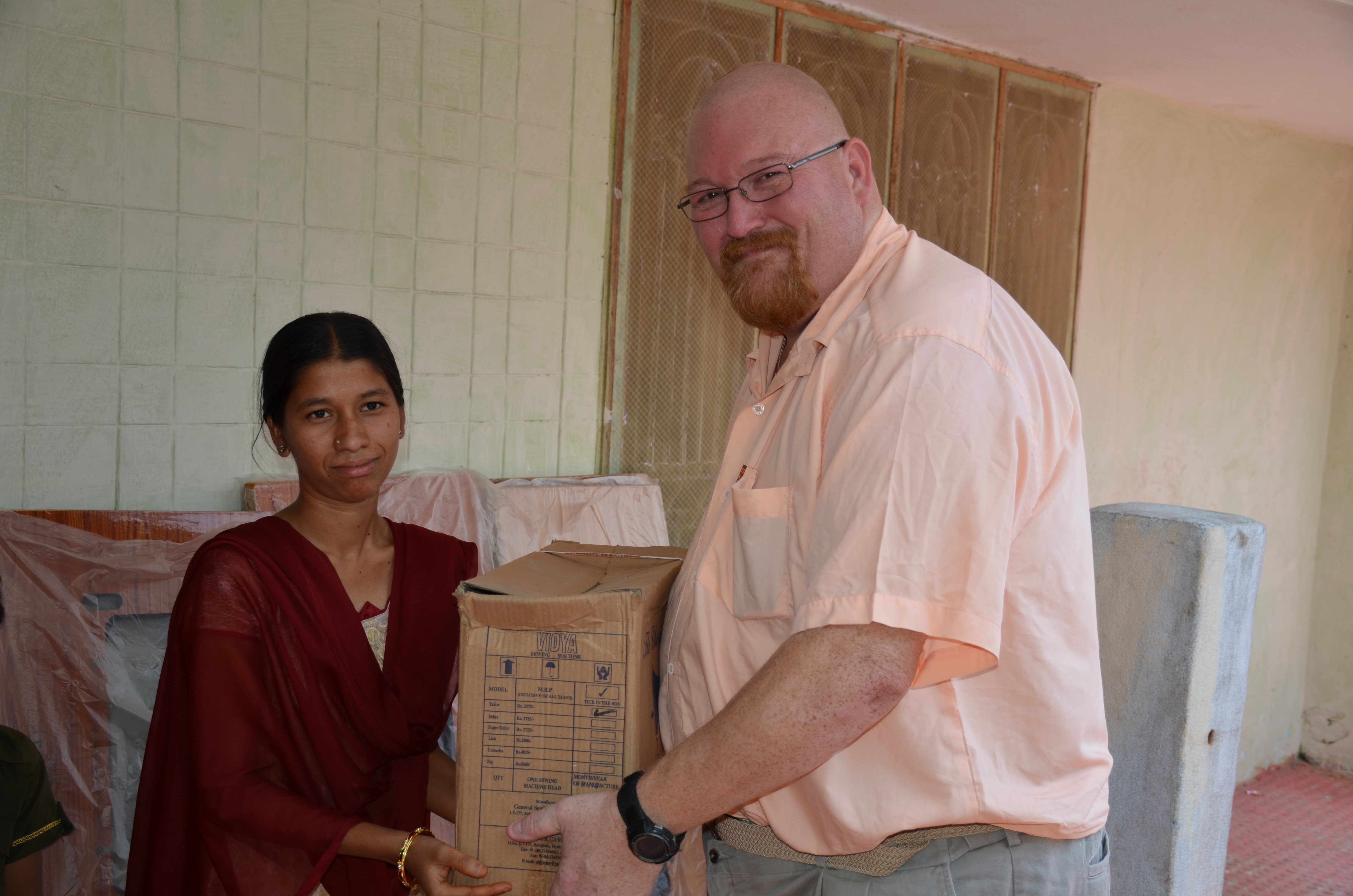
update from India

Pushpa with Alan Motley, short term mission trip participant, this past summer.

Pushpa started attending church, and even told her siblings about Christ. They came to church with her and also became believers.  However, their father was not pleased with this.  He told them that if they didn’t come back to Hinduism, they would not get their share of the Mango orchard he owned.  Pushpa and her siblings stood strong and refused to convert back to Hinduism.  Since they refused, their father signed over the property to his nephew.

Pushpa and her siblings pray for their father’s conversion daily.  As her pastor, Jessey has conducted prayer meetings and talked with the father, but to no avail.  Pushpa and her siblings, however, remain faithful to God in this time of hopelessness.  The situation is helped by the fact that Pushpa received free training at the Lydia Sewing Center and received a sewing machine.  She and her family are using the sewing machine to bring in extra money.  She is very thankful for the help she received from the Lydia Sewing Center.  Currently, she is preparing to follow Christ’s example in baptism.  Please remember our sister Pushpa and her siblings in your prayer.  Most importantly, pray for their parents who have yet to accept Christ into their hearts and lives.
Turnaround Denominations Continued

A few weeks ago I discussed Turnaround Denominations, and I shared some thoughts about what is required to be one. The idea came from Thom Rainer’s 2010 book entitled, Breakout Churches.

I strongly believe that General Baptist churches who are plateaued or declining can become healthy and growing, but the objective of a Turnaround Denomination cannot be achieved in isolation by only a few churches. For an entire denomination to be turned around, more and more churches must take on the heart of Jesus. Seeing the world as Jesus does is the best thing any church can do. Dan Spader, in his 4 Chair Discipling book, points out that our God is a missionary God, and Jesus Christ is a missionary Savior.

We see this missionary concept in the Bible over and over again. When Jesus saw a multitude of people, he was moved with compassion.  In other words, he was overcome with concern for them because he realized they were lost and searching, like sheep without their shepherd. This is what having a heart for the lost looks like. We see a wonderful example of this in John 4 when Jesus went out of his way to have a conversation with a woman who was spiritually lost and living in an entire community that was spiritually lost. In this passage Jesus challenged his disciples to lift up their eyes. He was telling them, “Look around you. What do you see? Do you see the same lost, sin-sick, dying people that I see?”

If churches as well as entire denominations are going to turn around, members must develop the same heart for the lost Jesus had.  We must stop looking down at our own feet, for to do so can minimize our ability to navigate peripheral obstructions in our Christian journey.  Looking down teaches us to be consumed exclusively with how things affect us. Instead, we must look up and around, as Christ instructed his disciples, to see those who are lost and in need of a Savior. That means we must look at those within our immediate vicinity — to our family, friends, and co-workers – understanding that they may never take that step of faith unless someone first begins looking for them or seeking them out.

But Jesus not only said for his disciples to look around or lift up their eyes and see the lost, but to actually have a spiritual conversation with them. If we do not tell them about Jesus, how else can they hear?

Taking the initiative to lift up our eyes and see the lost and then tell the lost the story of Jesus must go hand-in-hand with the leading of the Holy Spirit. The Spirit will guide us to those we need to see and with whom we need to speak. If we fail to take on the heart of Christ, our churches will remain inward-focused, dying organizations, instead of churches that are vibrant and alive, with a passion for looking outward into our communities, spreading salt and projecting light into this world.  If enough people turn around, then churches will turn around.  If enough churches turn around, an entire denomination will turn around!

Be on the lookout for my next installment about becoming a Turnaround Denomination.

10 Growth Restricting Habits

By Franklin Dumond

While churches fail to grow for a number of reasons there are several habits that restrict growth. Habits that restrict growth, unlike obstacles that restrict growth, can be broken or relearned without official action by the congregation. That is to say that these habits are learned behaviors, not requirements mandated in the bylaws. Culture can be changed without a vote but new ways of thinking and acting take time to develop.Certain church habits can restrict the growth of your congregation.

Habits that often restrict growth include:

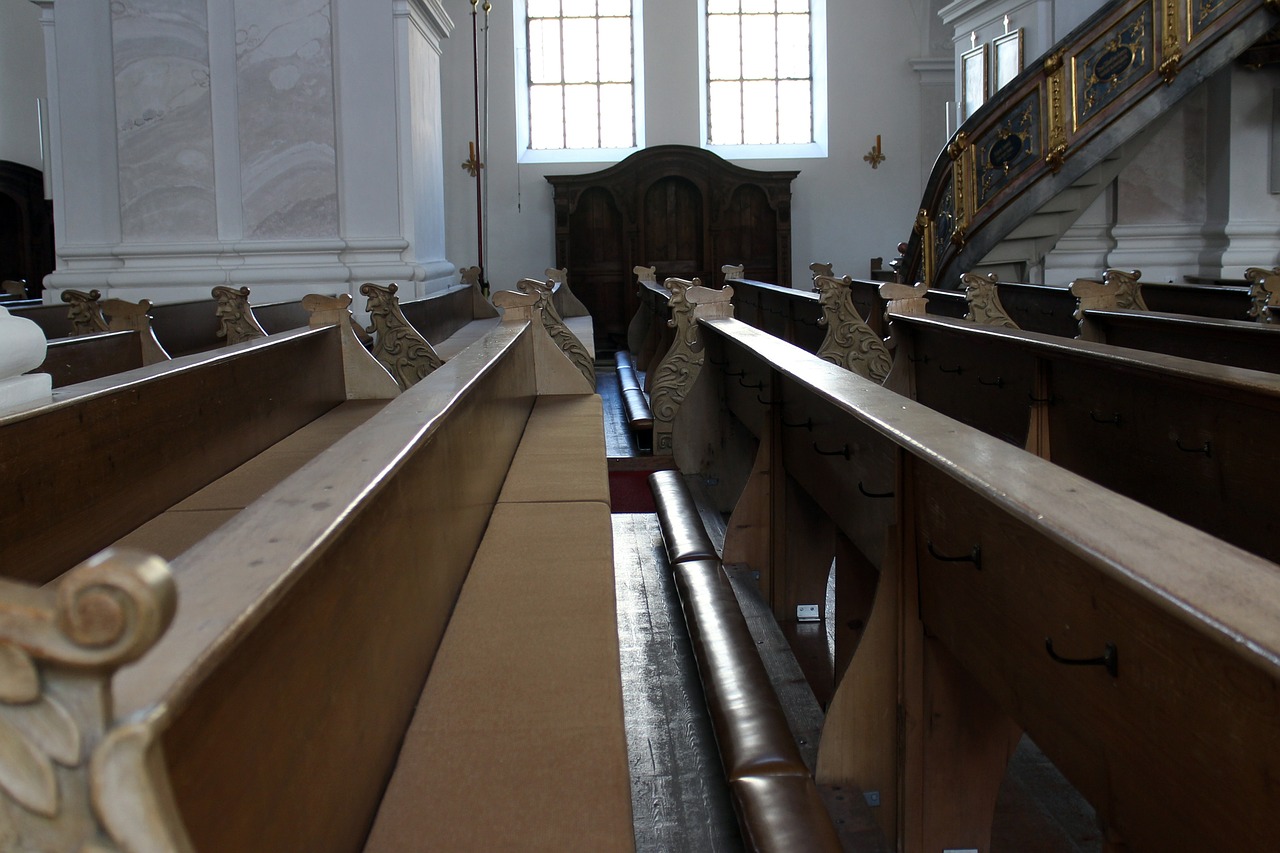
  1. Seating patterns. When the congregation huddles in the back one-third of the auditorium it not only emphasizes emptiness it also takes all the best seats that would often be preferred by visitors.
  2. Announcements. Need to be reduced or eliminated if a printed bulletin is being used. Announcements on the screen should run before and after worship not during. Verbal announcements should be limited to features that impact everyone. In a smaller church most information that cannot be written or projected can be transmitted by word of mouth. Announcements, if needed, should NEVER be used at the beginning or in the middle of a worship service.
  3. Proofing. The tendency these days to use projection systems and word processors that save files for future use introduces the need to be especially vigilant regarding errors. Errors in lyrics where words are misspelled or misused, or when stanzas do not match what is being sung, cannot be corrected just by saving the file for next time.
  4. Guest Friendly Atmosphere. Everything must be filtered through what a first time guest would expect/experience. If it is confusing or boring to the first time guest then it should not be said or done.
  5. Décor. Most church décor should be simplified and targeted more toward men with fewer flowers, ornaments, and pastels.
  6. Too many hats by too few people. Often willing volunteers are few and far between. Capable volunteers may then take on too many responsibilities, leaving them tired and frustrated while not providing a place for new folks to serve.
  7. Solo rather than team ministry. Capable volunteers forge ahead knowing it is easier to do it yourself. This results in solo ministry rather than team development and thus long term service by the same volunteers.
  8. Status Quo. Doing what we’ve always done out of habit (because we’ve always done it) rather than doing what we’ve always done because it works is a habit that restricts growth.
  9. Dust, clutter, decay. We get accustomed to dust, clutter, and decay but fresh eyes see it and often avoid return visits.
  10. Loss of Celebration in Worship. Where there is no celebration in worship a sense of duty and obligation makes growth unlikely.

In a follow-up post, I will suggest a few solutions for church leaders to use to change these habits.  (You can read those solutions here.)

What do you think? What habits have you noticed in congregations that restrict their growth potential?